
Living in the high-desert climate of Southern Utah offers breathtaking landscapes, but it also presents a unique set of challenges for your skin. Between the intense UV radiation at high altitudes and the arid air that strips the skin of its natural moisture barrier, the region creates a perfect storm for dermatological issues.
For many, a new spot or a changing mole is dismissed as “just a sunspot” or “dry skin.” However, delaying a professional evaluation can be the difference between a simple office procedure and a complex surgical intervention. Recognizing the early warning signs of skin damage is not about paranoia; it is about proactive risk management for your health.
The Danger of the “Desert Glow”
Many residents mistake chronic sun damage for a healthy tan. In reality, the thin atmosphere of the St. George area allows more UVB rays to penetrate the skin, accelerating photoaging and increasing the risk of carcinogenesis. When the skin is constantly stressed by UV exposure, it undergoes cellular mutations that may not be visible for years.
The ABCDEs of Melanoma
While many skin lesions are benign, melanoma—the most aggressive form of skin cancer—follows specific patterns. Monitoring your skin for these five markers can save your life:
- Asymmetry: One half of the mole does not match the other.
- Border: The edges are irregular, ragged, or blurred.
- Color: The color is not uniform; it may include shades of tan, brown, black, or sometimes red and white.
- Diameter: The spot is larger than 6mm (roughly the size of a pencil eraser), though some melanomas are smaller.
- Evolving: The mole is changing in size, shape, or color, or it begins to itch or bleed.
If you notice any of these characteristics, seeking professional dermatology St George Utah services is the only way to secure an accurate diagnosis through a dermoscopy or biopsy.
Non-Melanoma Warning Signs
While melanoma gets the most attention, Basal Cell Carcinoma (BCC) and Squamous Cell Carcinoma (SCC) are far more common in high-sun environments. These often appear differently than a standard mole.
The “Sore That Won’t Heal”
One of the most common red flags for BCC is a pearly, translucent bump that may bleed, crust over, and then seem to heal, only to reappear in the same spot. Because these lesions often look like a minor scrape or a pimple, residents frequently ignore them for months.
Rough, Scaly Patches
SCC often manifests as a firm, red nodule or a flat lesion. Practitioners look for a distinct “sandpaper-like” texture—a gritty, rough feel upon palpation that does not resolve with moisturizing. These are frequently found on high-risk anatomical sites that receive direct, perpendicular sun exposure, such as the bridge of the nose, the helix (outer rim) of the ear, and the dorsal surface of the hands.
Managing Skin Health in an Arid Climate
Preventing skin cancer is the primary goal, but maintaining the skin’s integrity is equally important. The extreme dryness of Southern Utah can lead to micro-fissures in the skin, which act as entry points for bacteria and irritants.
Strategic Sun Protection
Standard sunscreen application is often insufficient for the intensity of the Utah sun. To effectively mitigate risk:
- Broad-Spectrum Only: Ensure your sunscreen protects against both UVA (aging) and UVB (burning) rays.
- Physical Barriers: UPF-rated clothing is more reliable than lotion because it does not wear off or require reapplication every two hours.
- The “Peak Hour” Rule: Limit direct exposure between 10:00 AM and 4:00 PM, when the UV index is at its highest.
Hydration and Barrier Repair
In a desert climate, the sequence of product application is critical to prevent transepidermal water loss (TEWL). Rather than applying cream to dry skin, start by applying a humectant like hyaluronic acid to damp skin to draw moisture into the epidermis. Immediately follow this with a heavy occlusive moisturizer or a ceramide-rich cream to seal that moisture in, creating a physical barrier against the arid air.
When to Schedule a Professional Screening
Self-exams are a vital first step, but they are not a substitute for a clinical skin check. A professional can identify “ugly ducklings”—spots that may not fit the ABCDE criteria but look significantly different from the rest of your skin’s patterns.
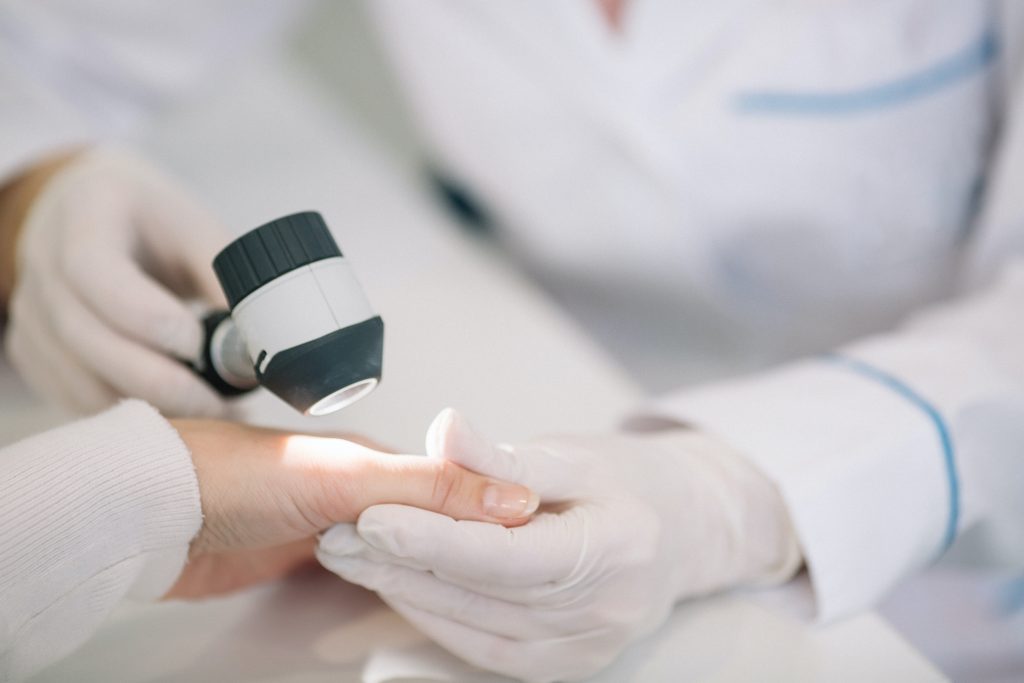
During a clinical full-body screening, a provider typically utilizes a dermatoscope—a handheld device with a polarized light and magnifying lens. This allows the clinician to visualize the pigment networks and vascular structures beneath the stratum corneum that are invisible to the naked eye.
Annual screenings are recommended for anyone with a history of blistering sunburns or a family history of skin cancer. By catching precancerous lesions (actinic keratoses) early, a provider can remove them via cryotherapy or other minimally invasive methods before they ever evolve into malignancy. Taking an hour once a year for a full-body check is a small investment for the long-term security of your health.
You may also like
-
Stop the Specialist Shuffle: How a Single Point of Contact Reduces Medical Errors
-
Stop Ignoring Leg Heaviness: How to Identify and Treat Chronic Venous Insufficiency
-
How St George Adults Stop Chronic Joint Pain Without Surgery or Pills
-
Ways St. George Residents Can Maintain a Flawless Manicure Between Appointments
-
Finding the Right Dental Care Provider for Your Entire Family